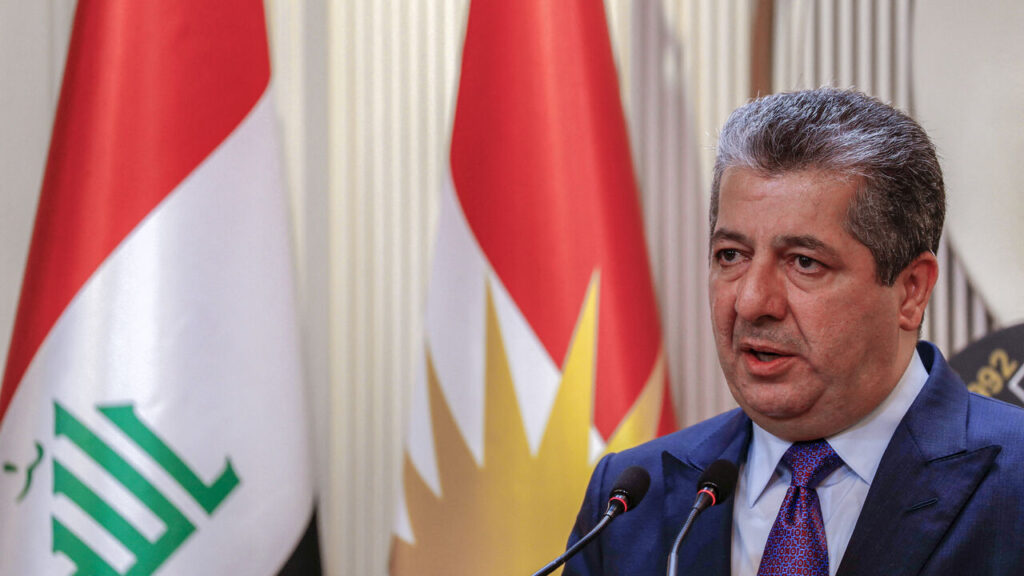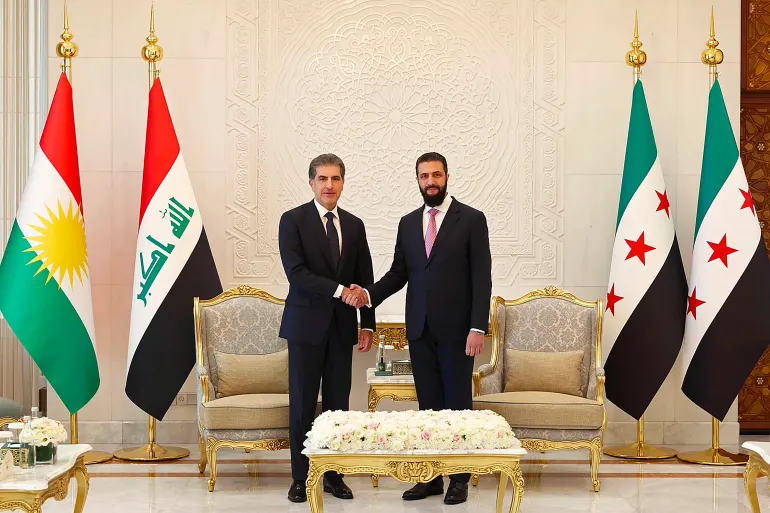

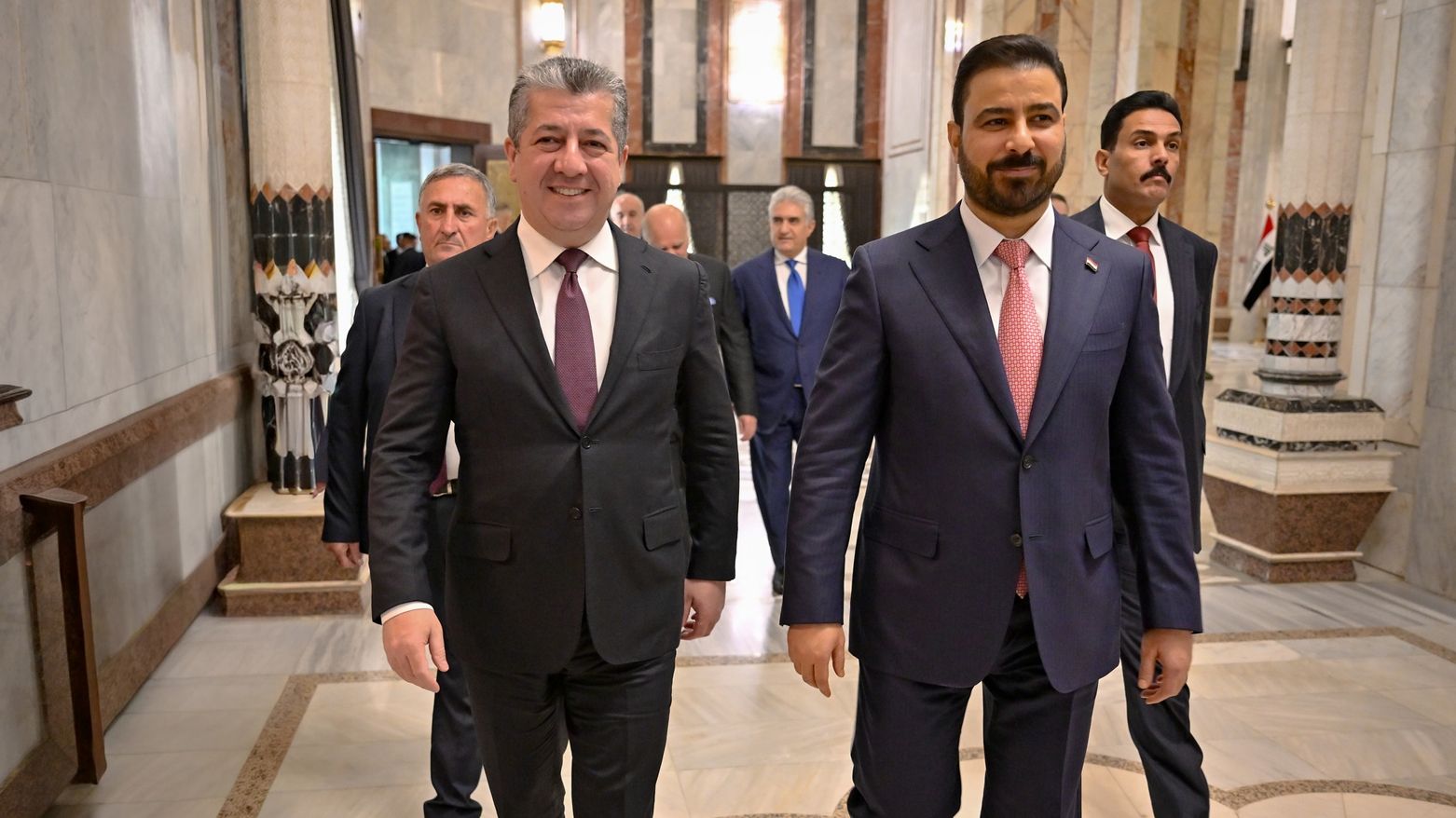
Kurdistan Region Prime Minister Masrour Barzani led a senior delegation to Baghdad for high-level meetings with the newly elected Iraqi Prime Minister, Ali Al-Zaidi and other Iraqi federal leaders, continuing efforts to resolve long-standing disputes between the Kurdistan Regional Government and the federal government of Iraq.
The visit focused on advancing dialogue over key political, financial, and constitutional issues, including budget transfers, civil servant salary payments, oil exports, customs procedures, and the implementation of agreements between Erbil and Baghdad. It also came at an important moment for Iraq, as the new federal government works to stabilize governance and address unresolved challenges affecting all communities.
A Constitutional Framework for Dialogue
During the visit, Prime Minister Barzani met with senior Iraqi officials, including the Iraqi Prime Minister, the Speaker of the Council of Representatives, the President of the Supreme Judicial Council, and leaders from Iraqi political parties.
According to the Kurdistan Regional Government, the meetings focused on the general situation in Iraq and the wider region, while also addressing outstanding issues between the Kurdistan Region and the federal government on the basis of the Iraqi constitution.
The KRG has consistently emphasized that disputes between Erbil and Baghdad should be resolved through constitutional mechanisms, genuine partnership, and respect for the Kurdistan Region’s rights and responsibilities within federal Iraq.
Financial Stability and Public Salaries
A central focus of ongoing discussions remains the financial relationship between the Kurdistan Region and the federal government. For years, disputes over budget allocations, oil revenues, and salary payments have placed pressure on public employees and families across the Kurdistan Region.
Delays and reductions in federal transfers have affected hundreds of thousands of civil servants, creating uncertainty for households and limiting the Region’s ability to maintain consistent public services. Prime Minister Barzani’s continued engagement with Baghdad reflects the KRG’s commitment to finding practical solutions that protect the livelihoods of citizens and support long-term financial stability.
Customs, Trade, and the ASYCUDA System
The visit also comes as Baghdad and Erbil continue discussions over customs procedures and the implementation of the ASYCUDA digital customs system at the Kurdistan Region’s border crossings.
The Iraqi government recently approved the expansion of ASYCUDA at the Ibrahim Khalil border crossing, allowing all goods to be imported through the crossing under the system beginning June 1, provided that merchants complete preliminary customs procedures. Previously, only food and medicine were permitted under this framework.
ASYCUDA, developed by the United Nations Conference on Trade and Development, is designed to modernize and standardize customs procedures through digital integration. While the system may help streamline trade and improve customs coordination, its implementation has also raised concerns in the Kurdistan Region about protecting the Region’s constitutional authority over its border crossings and ensuring that any changes are carried out through agreement and partnership.
Moving Toward Practical Solutions
The continued dialogue between Erbil and Baghdad reflects the importance of sustained engagement in addressing disputes that affect daily life, economic stability, and the future of federal governance in Iraq.
From public salaries and budget transfers to customs procedures and oil exports, these issues are not only administrative or political. They directly affect families, businesses, public services, and the broader economic future of the Kurdistan Region.
Prime Minister Masrour Barzani’s visit to Baghdad underscores the KRG’s commitment to resolving outstanding issues through dialogue, constitutional principles, and constructive engagement with the federal government. As Iraq enters a new political phase, continued cooperation between Erbil and Baghdad remains essential to protecting stability, strengthening governance, and ensuring the rights of all components within Iraq.