
As Eid al-Adha celebrations began across Iraq and the Kurdistan Region, tens of thousands of visitors traveled to the Kurdistan Region to enjoy its mountain landscapes, cooler summer climate, hospitality, and growing tourism sector.
Tourism officials across Duhok, Erbil, Sulaimani, and Halabja reported strong visitor numbers during the holiday, with many hotels, motels, guest houses, and tourist facilities operating near full capacity. Visitors from central and southern Iraq made up a large share of arrivals, continuing a seasonal trend that has made the Kurdistan Region one of Iraq’s leading holiday destinations.
Duhok as a Major Tourism Destination
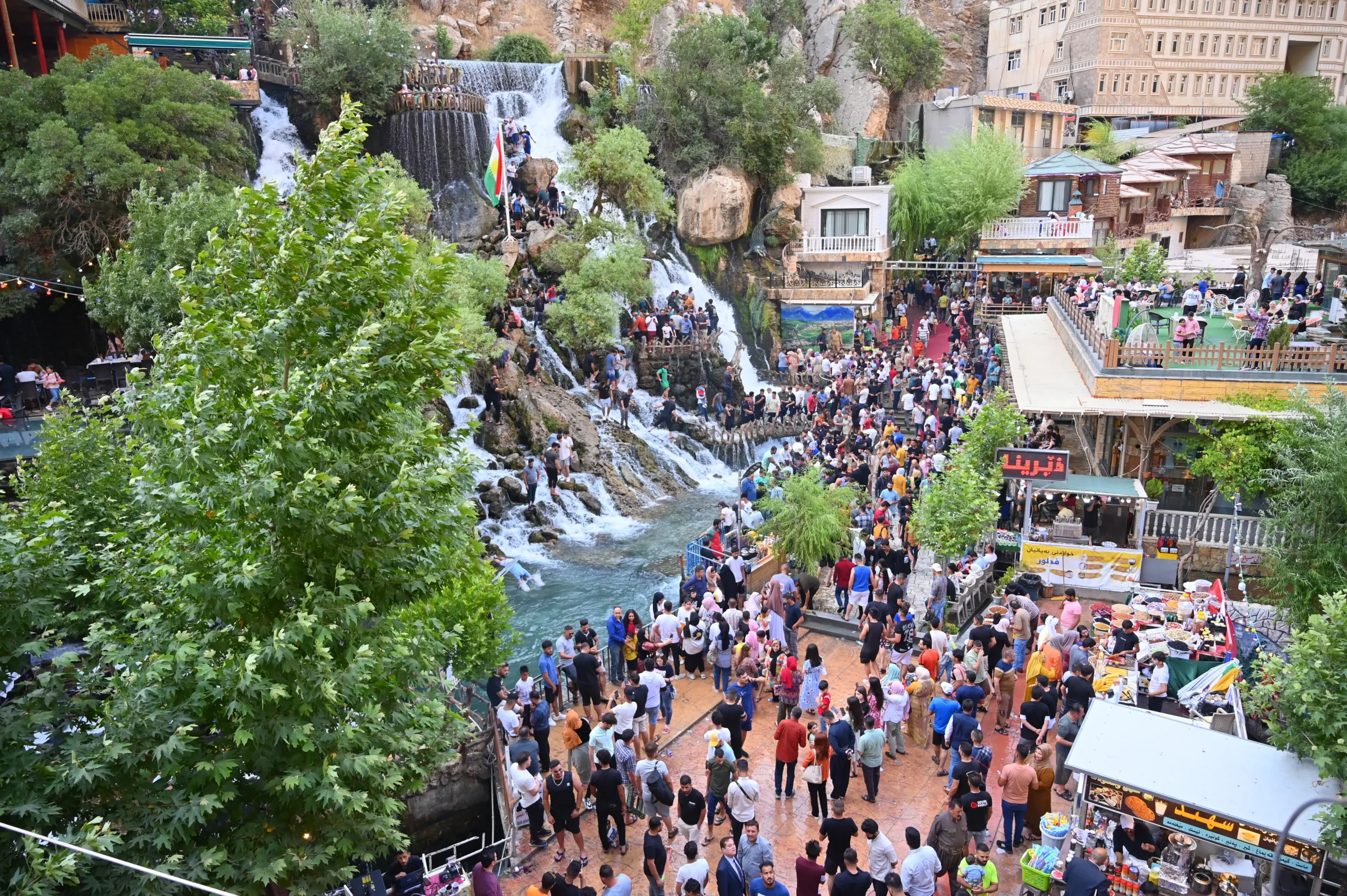
Duhok province remained one of the most popular destinations during Eid al-Adha, with more than 30,000 visitors expected during the holiday. Known for its waterfalls, mountains, resorts, and natural scenery, Duhok has become a preferred destination for families seeking cooler weather and outdoor recreation.
Popular areas such as Silav and Ashawa attracted large numbers of visitors, many of whom traveled from Baghdad and other parts of Iraq. Tourists praised both the natural beauty of the province and the warm welcome they received from local communities.
Duhok’s growing tourism sector reflects broader development under the Kurdistan Regional Government’s ninth cabinet. More than 50 new tourism projects have been completed across the province, helping expand services and strengthen Duhok’s reputation as a major tourism hub. Today, the province is home to hundreds of tourist facilities and natural tourist sites, supporting both local businesses and the wider regional economy.
Tourism Growth Across the Region
Across the Kurdistan Region, tourism authorities reported strong preparations to welcome visitors during Eid. In Sulaimani, officials noted that tens of thousands of tourists visited the province’s districts, with information centers, brochures, streamlined checkpoint procedures, and hospitality services in place to assist guests.
In Erbil, tourism officials also reported a sharp increase in arrivals compared to Eid al-Fitr, with many hotels, guest houses, and tourist villages fully booked. The province’s historical landmarks, resorts, mountain areas, and family-friendly destinations continued to attract visitors throughout the holiday.
Halabja also welcomed large numbers of tourists, particularly to the Hawraman region and popular destinations such as Byara and Zalm. Although the province has fewer hotels than Erbil, Duhok, and Sulaimani, local officials noted that cabins, kiosks, and tourist houses were prepared to receive visitors.
Eid Traditions and Community Life
Alongside the tourism surge, Eid al-Adha was marked by morning prayers, family gatherings, and community traditions across the Kurdistan Region. In Erbil and Sulaimani, thousands of worshippers filled mosques and designated prayer areas to perform Eid prayers and exchange greetings.
For many families, Eid began with communal prayers followed by visits with relatives, traditional meals, and time spent honoring loved ones. Markets saw increased activity, while families also visited cemeteries to recite prayers before continuing holiday gatherings.
Despite ongoing economic pressures and political challenges, residents described Eid as a time of reflection, hospitality, and renewed social connection. The participation of displaced families in Eid prayers and gatherings also reflected the Kurdistan Region’s continued culture of coexistence and welcome.
Tourism as an Economic Opportunity
The Eid holiday highlighted the growing importance of tourism to the Kurdistan Region’s economy. Hotels, restaurants, transportation providers, small businesses, resorts, and local vendors all benefit from increased travel during holiday periods.
The strong number of visitors also reflects the Region’s broader appeal as a safe and welcoming destination within Iraq. With its natural beauty, religious and cultural diversity, historical sites, and expanding tourism infrastructure, the Kurdistan Region continues to strengthen its position as a leading destination for domestic tourism.
As thousands of visitors celebrated Eid al-Adha across the Region, the holiday underscored both the resilience of local communities and the continued potential of tourism to support economic growth, cultural exchange, and connection among the people of Iraq.