
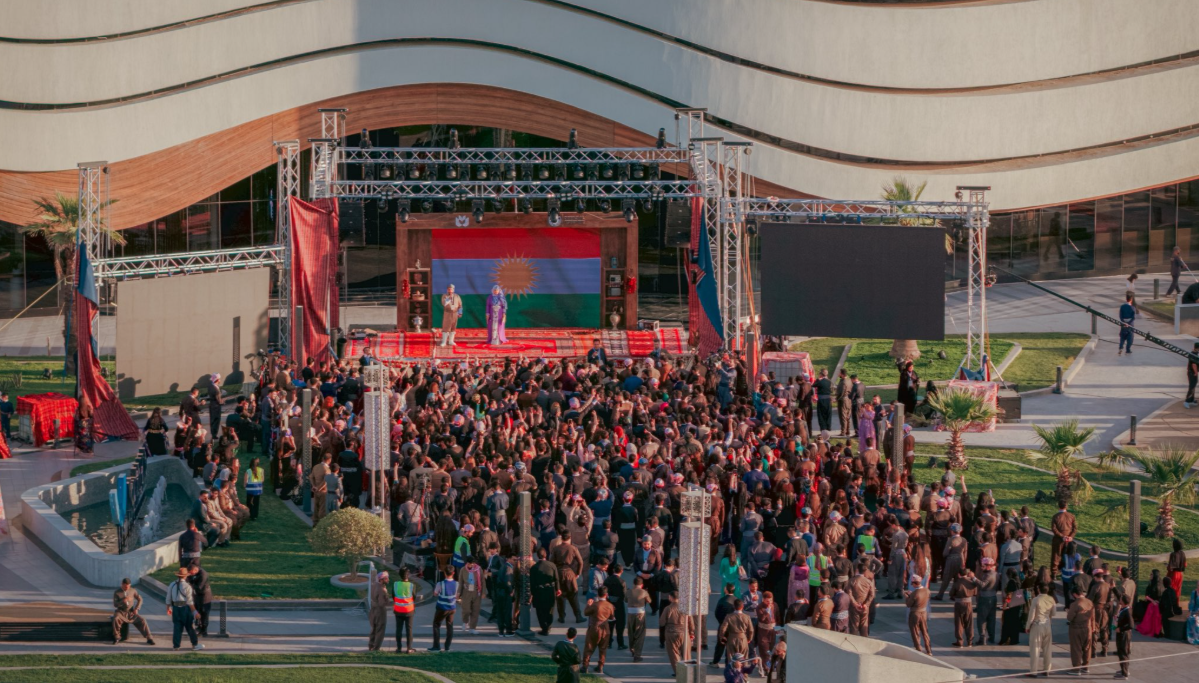
Kurdistan has officially entered the Guinness World Records after more than 1,000 participants wearing traditional Kurdish attire gathered in Erbil, securing recognition for the largest assembly of people dressed in national clothing.
Organized by the Kurdistan Foundation, the Kurdish Cultural Clothing Festival brought together thousands of participants from across Kurdistan in a vibrant celebration of heritage, identity, and national pride. Dressed in colorful traditional garments representing different regions and communities, participants helped showcase one of the most enduring symbols of Kurdish culture on an international stage.
Traditional Kurdish clothing carries deep historical and cultural significance. Across Kurdistan, styles vary by region, with distinct fabrics, embroidery, colors, headpieces, belts, and accessories reflecting local traditions and family heritage. Women’s attire often features long, flowing dresses made from bright or patterned fabrics, paired with decorative belts, jewelry, and scarves. Men’s traditional clothing commonly includes loose trousers, a wrapped waistband, a vest or jacket, and the distinctive jamadani headscarf, long associated with Kurdish identity and resilience.
These garments are more than ceremonial dress. For generations, Kurdish clothing has served as a visible expression of cultural continuity, worn during Newroz, weddings, national celebrations, and community gatherings. The designs often reflect Kurdistan’s mountainous landscape, rural traditions, craftsmanship, and the pride of families who pass clothing styles and techniques from one generation to the next.
The Guinness World Record achievement marks a milestone for Kurdish cultural heritage and highlights the importance of preserving national traditions in a rapidly changing world. Organizers emphasized that the festival was not only about breaking a record, but also about encouraging younger generations to take pride in their roots and share Kurdish culture with a global audience.
The celebration in Erbil stands as a powerful reminder of the richness, diversity, and resilience of Kurdish identity. By bringing together thousands of people in traditional attire, Kurdistan presented the world with a colorful and unified display of its heritage, securing international recognition for one of its most cherished cultural symbols.