
Record Kurdish Turnout, KDP Surpasses One Million Votes, U.S. Voices Support
The sixth parliamentary elections took place across Iraq, including the Kurdistan Region, on November 11, 2025. This vote drew significant attention as it marked another step in Iraq’s ongoing effort to strengthen its democratic process and rebuild public trust in state institutions. The United States and several other countries congratulated Iraq on the peaceful and successful completion of the elections.
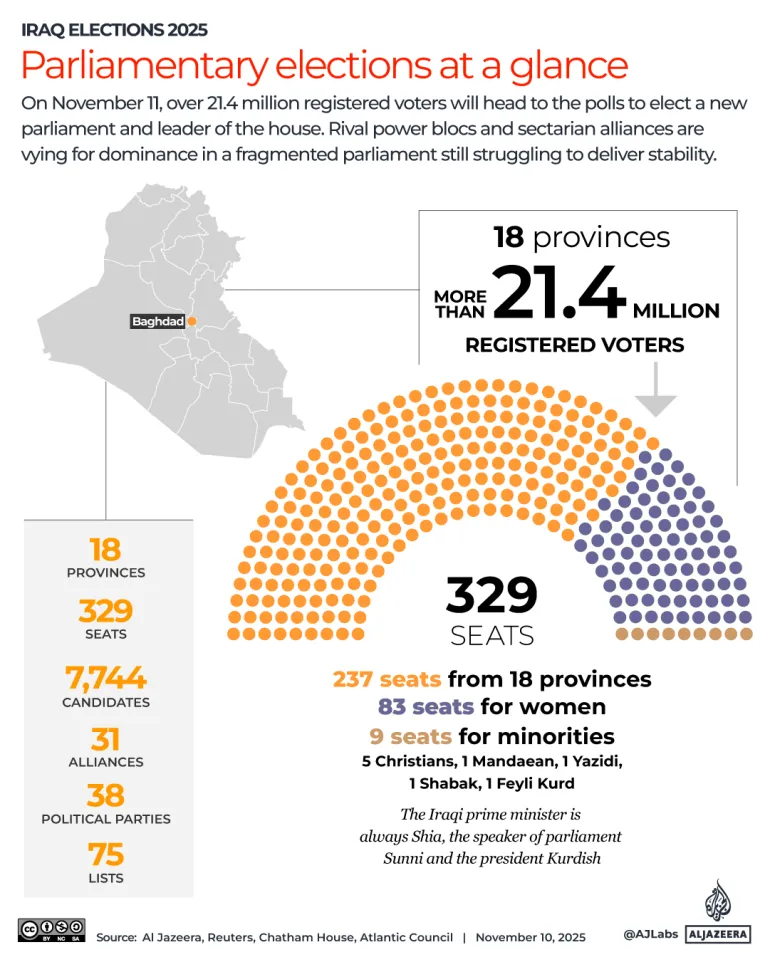
The Independent High Electoral Commission (IHEC) reported turnout exceeding 56% nationwide, a meaningful increase from 43% in 2021. Voters in the Kurdistan Region recorded the highest participation in the country, exceeding 70% in Erbil and Duhok.
Women participation was particularly strong in Duhok, where women accounted for more than 47% of all voters—nearly 296,000 ballots, the highest female participation rate in Iraq. Across the country, women cast more than 5.1 million votes, and the constitutional quota ensures that at least 83 women will serve in the new parliament once seat allocations are finalized.
Election Results and Seat Distribution
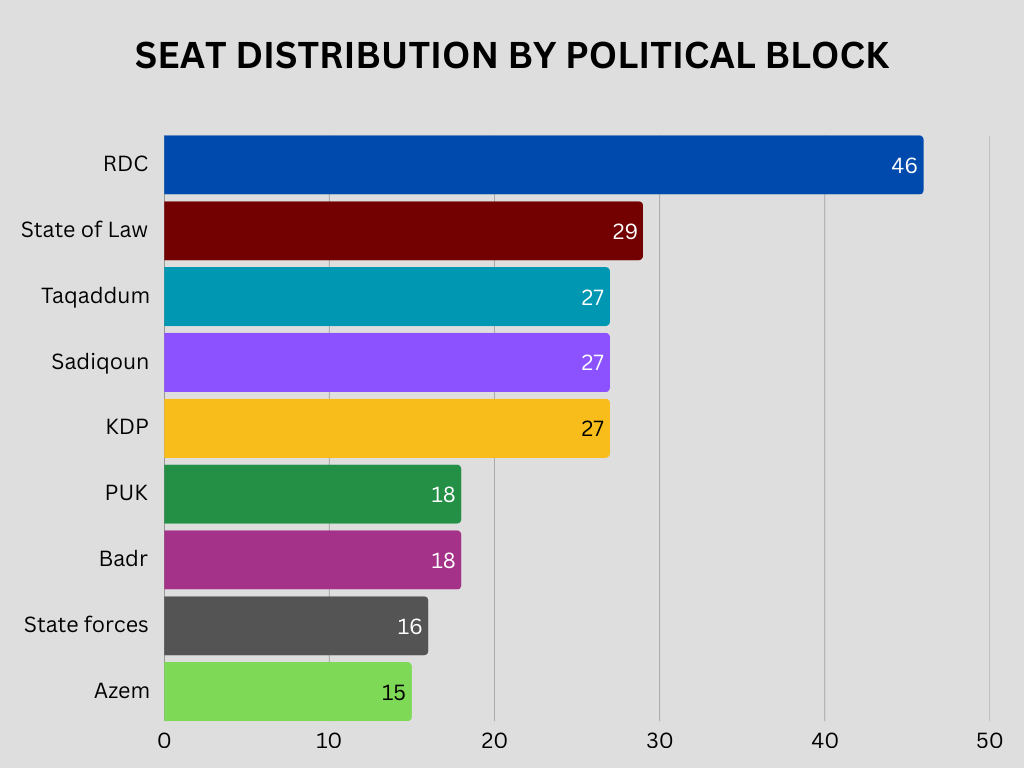
No party or alliance gained a parliamentary majority in the 329-seat legislature. The breakdown of the major parties seat allocation are as follows:
- 46 seats for the Reconstruction and Development Coalition (RDC), led by incumbent Prime Minister Mohammed Shia al-Sudani, the most of any bloc.
- 29 seats for the State of Law Coalition, led by Nouri Al-Malaki.
- 27 seats for the Progress Party (Taqaddum), led by former Speaker Mohammed Hadid al-Halbousi.
- 27 seats for the Sadiqoun Bloc
- 27 seats for the Kurdistan Democratic Party (KDP)
- 18 seats for the Patriotic Union of Kurdistan (PUK)
- 18 seats for the Badr Organization, led by Hadi al-Ameri
- 16 seats for the State Forces Alliance, led by Ammar al-Hakim
- 15 seats for Azem Alliance in Iraq, led by Muthanna Al‑Samarrai
IHEC also confirmed the allocation of Iraq’s 9 minority quota seats, which include five Christian seats, one Yazidi seat, one Shabak seat, one Mandaean seat, and one Feyli Kurd seat.
Kurdistan Region Highlights
In a landmark result, the Kurdistan Democratic Party (KDP) secured over 1 million votes nationwide, the highest total for any single party.
In the Kurdistan Region, turnout reached nearly 72% in Erbil and 78% in Duhok. The KDP achieved 9 seats in each province and captured 5 seats in Nineveh. The PUK won 8 seats in Sulaimani and 4 in Kirkuk. Women candidates performed strongly in several Kurdish provinces, benefiting from both direct votes and the national gender quota, ensuring continued female representation from the Region in Baghdad. Together, Kurdish parties remain key players in coalition talks and in the selection of Iraq’s next President, a position traditionally reserved for a Kurdish nominee.
Coalition Negotiations and Government Formation
Under Iraq’s constitution, the government formation process begins with the ratification of election results, followed by the convening of parliament within 15 days. The legislature then elects a Speaker and two deputies and proceeds to choose the President by a two-thirds majority or, if necessary, by simple majority in a second round. The President then assigns the largest parliamentary bloc the task of forming a government; the nominee has 30 days to present a cabinet and governing program for a confidence vote. Given Iraq’s highly fragmented political landscape and past experience—eight months to form a government in 2010 and eleven months in 2021–22—a protracted negotiation period appears likely in 2025 as well.