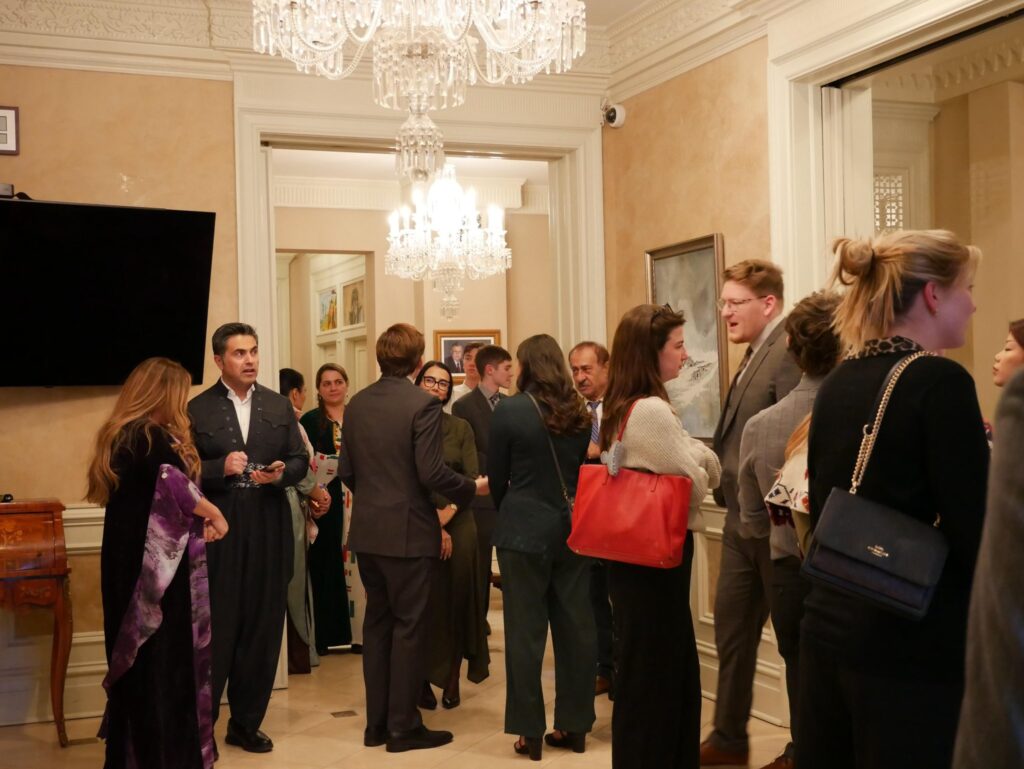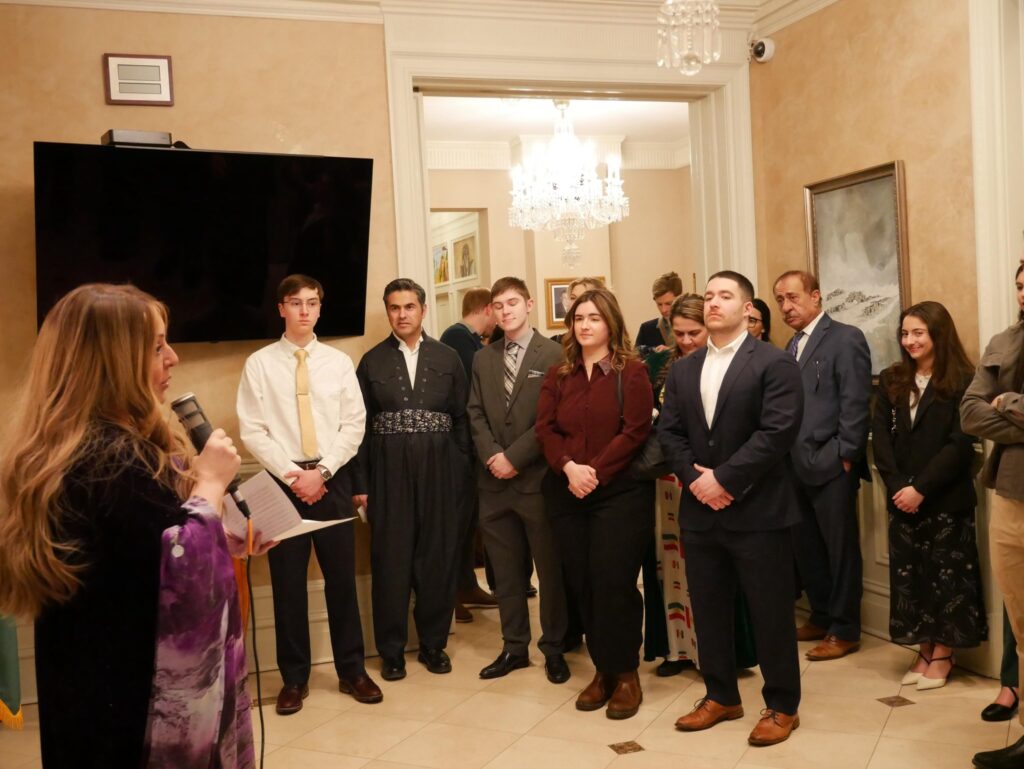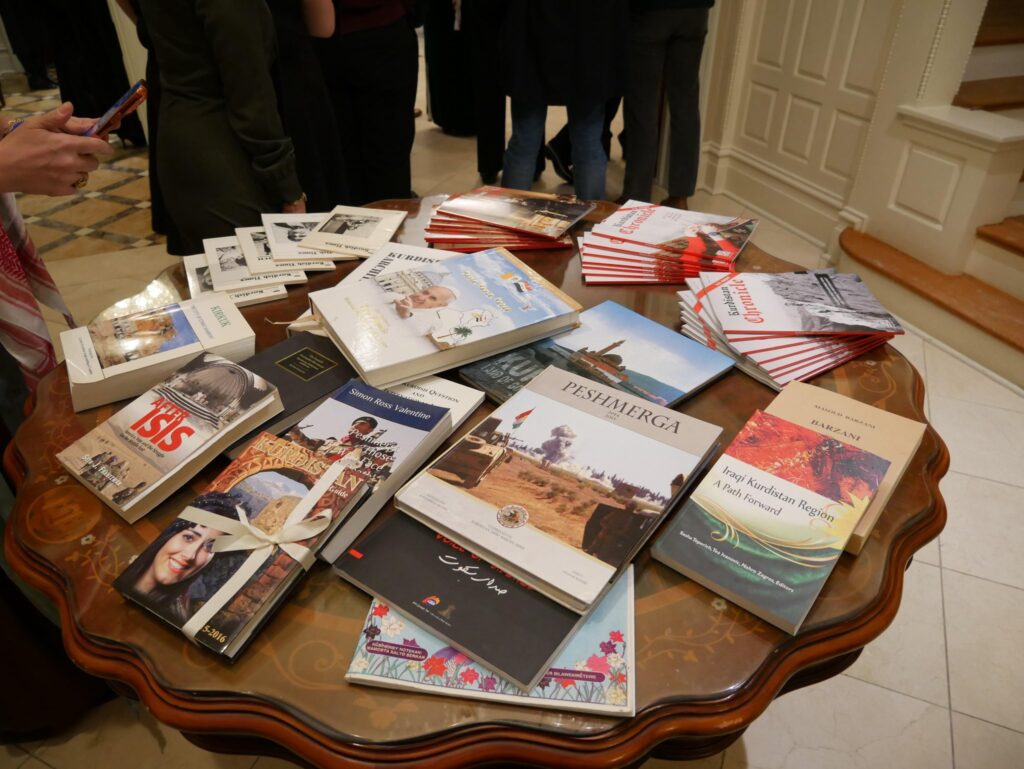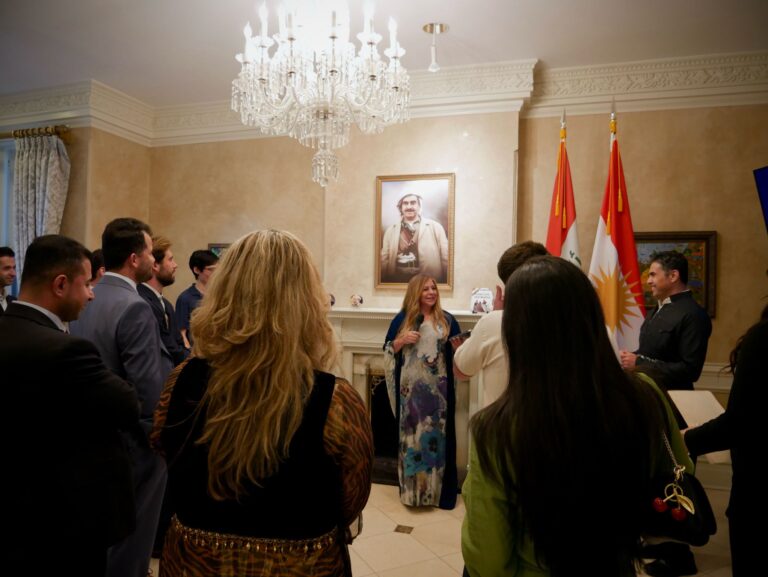

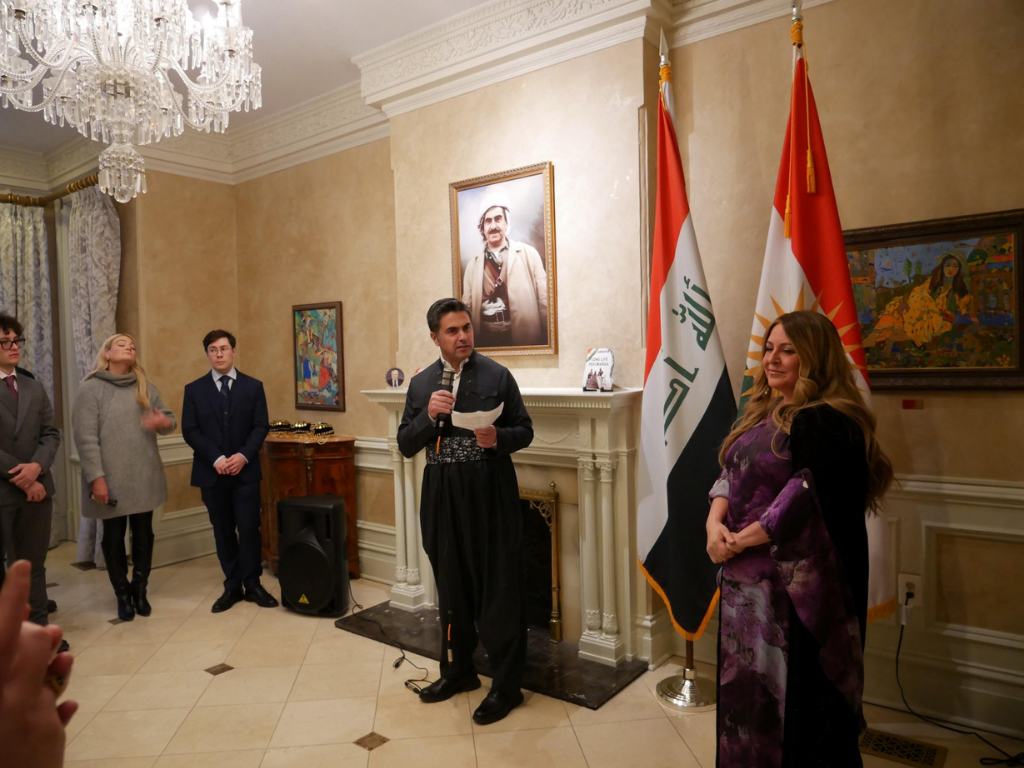
In partnership with the American University School of International Service and Dr. Yerevan Saeed Barzani Scholar-in-Residence and Director of Global Kurdish Initiative for Peace, the Kurdistan Regional Government (KRG) Representation in the United States welcomed students and Barzani fellows for an evening focused on the Kurdistan Region’s history, governance, and evolving regional landscape.
Representative to the United States, H.E. Treefa Aziz, an alumna of SIS, welcomed the group and reflected on the value of academic engagement. “I am proud to call the School of International Service my alma mater,” she noted, noting the importance of dialogue between students and policymakers.
Establishment of the Kurdistan Regional Government
Students were introduced to the historical foundations of Kurdish self-governance in Iraq.
The Kurdistan Regional Government was established in 1992 following democratic elections after the first Gulf War. International protection measures, including the no-fly zone in northern Iraq, helped shield the Kurdish population from Saddam Hussein’s regime. After 2003, Iraq’s Constitution formally recognized the Kurdistan Region as a federal, semi-autonomous entity.
Today, the Region manages internal affairs including education, healthcare, economic development, and regional security coordination. Over three decades, it has strengthened institutions, modernized public services, and expanded infrastructure — including providing 24-hour electricity to most of the Region.
The Kurdistan Region’s commitment to pluralism was also highlighted. Diverse religious and ethnic communities live side by side, and during the ISIS crisis, millions of displaced persons sought refuge in the Kurdistan Region.
Recent Regional Developments
Students also engaged in discussion about the situation in northeast Syria.
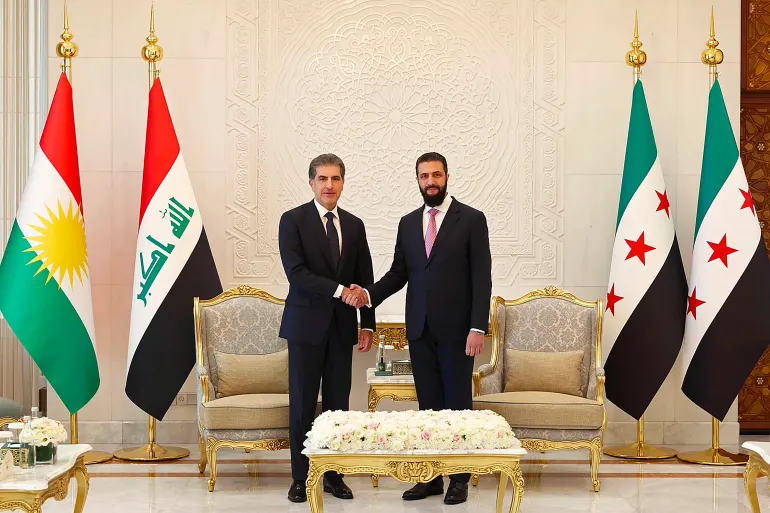
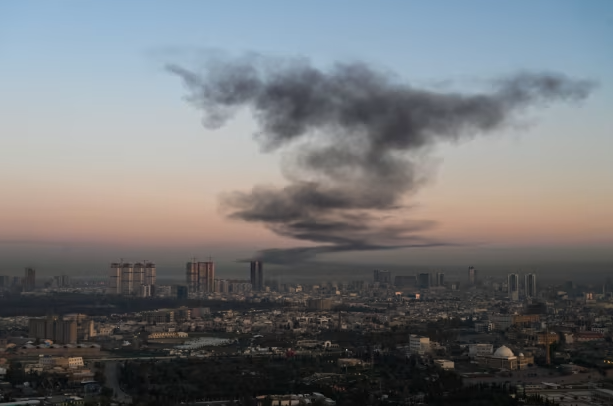
Recent clashes between Syrian government forces and the Syrian Democratic Forces (SDF) raised serious humanitarian and security concerns. A comprehensive agreement announced on January 30 established a ceasefire and outlined the phased integration of SDF forces and administrative institutions into the Syrian state, while including provisions for Kurdish civil and educational rights.
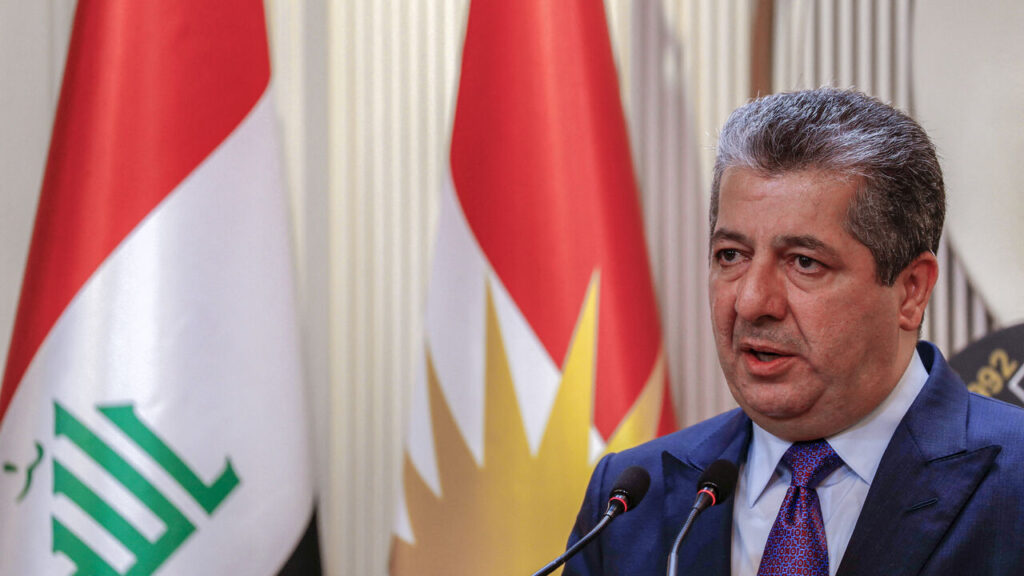
The conversation emphasized the positive role of the Kurdistan Region leadership in brokering peace and encouraging all sides to resolve issues through dialogue and negotiations.
Representative Aziz reaffirmed solidarity with Kurdish communities in northeast Syria and stressed the importance of dialogue and international engagement to prevent further escalation.
A Strategic Security Partnership
The evening also underscored the Kurdistan Region’s role as a security partner of the United States.
The Peshmerga forces played a key role in defeating ISIS alongside American and coalition forces. As Representative Aziz noted, many Kurds sacrificed their lives to protect their communities and contribute to global security.
Security cooperation with the United States remains a cornerstone of the bilateral relationship and contributes to the Region’s stability within a complex regional environment.
Investing in Future Leaders
Beyond policy discussions, the event served as an opportunity for students to engage directly with KRG staff and learn about diplomatic work, congressional outreach, and strategic engagement in Washington.
The evening concluded with remarks from Dr. Yerevan Saeed and an open exchange of questions, followed by informal networking.
Hosting American University students reflects the KRG-US Representation’s commitment to strengthening people-to-people ties and investing in the next generation of policymakers and practitioners.
The KRG Representation looks forward to continued collaboration with academic institutions to promote dialogue, understanding, and long-term partnership.